
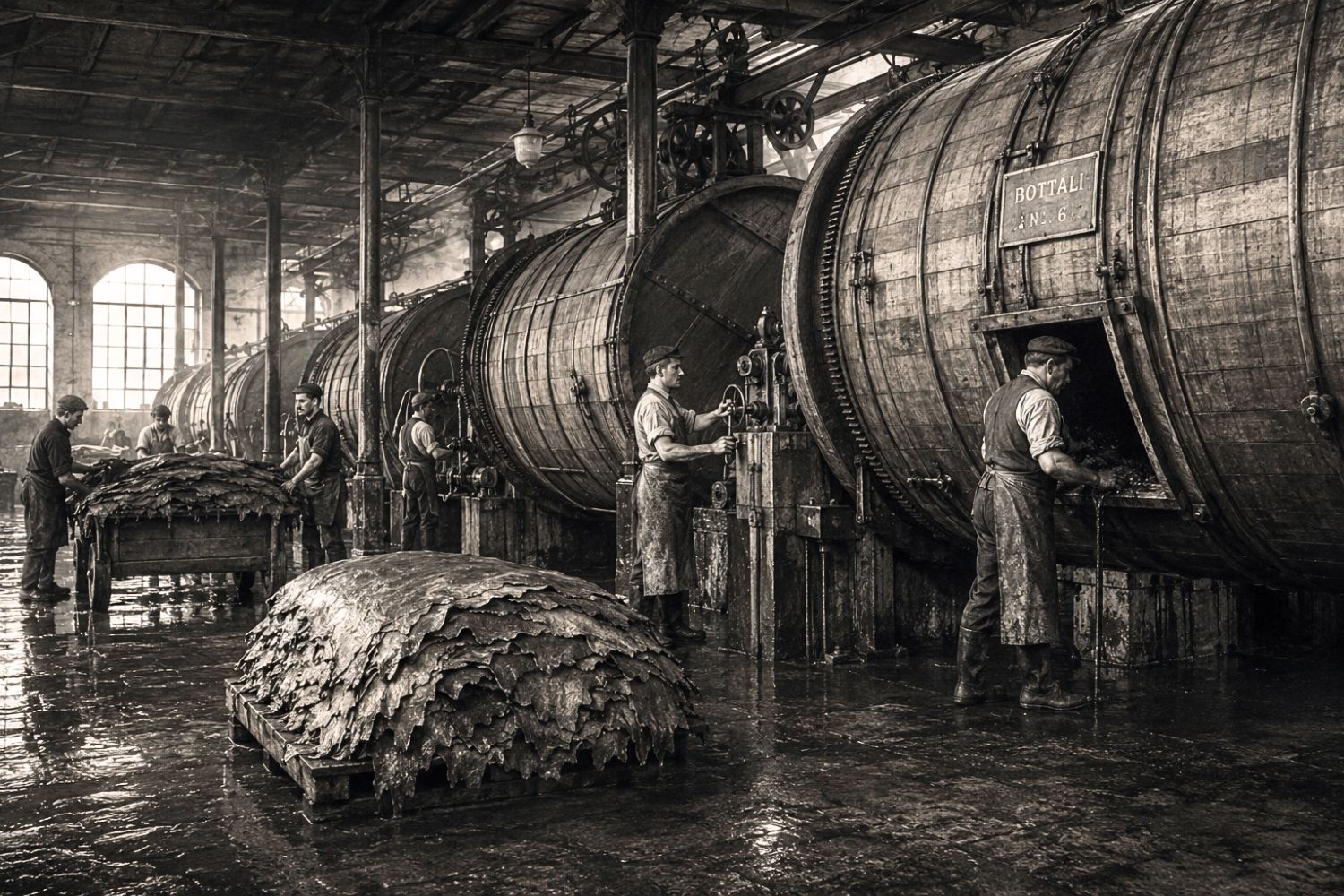
From the first treaded hides to the transformation of raw material
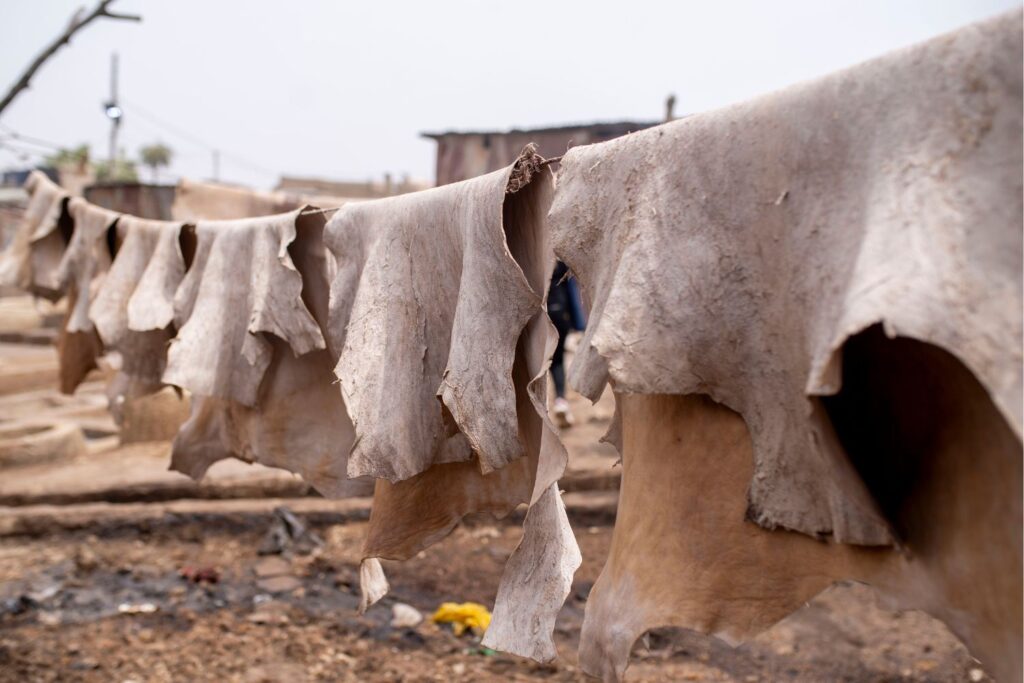
The history of leather largely coincides with the history of tanning, the process that makes it possible to transform raw animal hide, naturally prone to decomposition, into a stable, durable material that can be used over time. Long before the existence of organized agriculture, metallurgy, or advanced manufacturing, prehistoric communities had already discovered that a hide left in its natural state would quickly harden, rot, and lose its properties. From this need, the first empirical preservation techniques emerged.
Prehistoric populations began experimenting with:
- sun drying;
- smoke curing near a fire;
- treating hides with animal fats;
- soaking hides in water containing bark, leaves, and plant-based substances.
Without understanding the underlying chemical principles, they were already using the first elements that we now recognize as the basis of vegetable tanning.
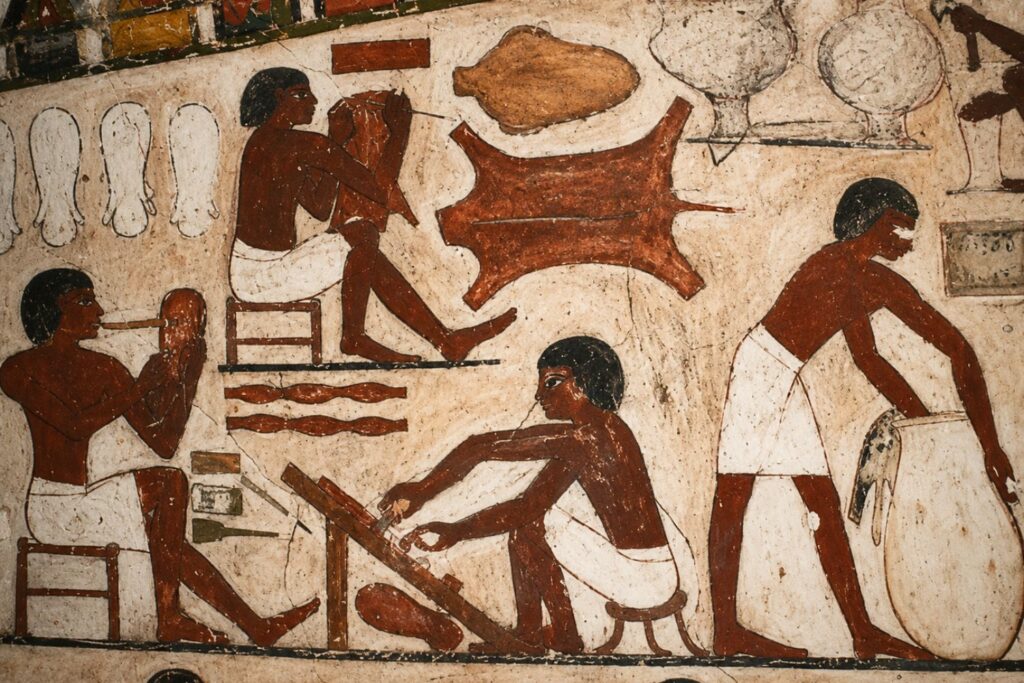
Ancient civilizations: the birth of tanning as a profession
With the development of the first civilizations, leather processing ceased to be a domestic practice and became a specialized skill. The ancient Egyptians used cleaning, softening, and treatment process to produce sandals, containers, belts, and military equipment.
Later, Greeks and Romans refined the process by introducing more controlled methods and establishing dedicated leatherworking activities. In the Roman world, the availability of leather was so important that it supported armies, transportation, and trade.
The Middle Ages: the tanner’s profession is born
During the Middle Ages, tanning became a true economic activity. It was during this period that tanners’ corporations, specialized workshops, and dedicated productions areas emerged. Tanneries were built near waterways because every stage of the process required large amounts of washing and treatment.
The dominant method was vegetable tanning, obtained with natural tannins extracted from: oak bank, chestnut, mimosa, and other plant species.
These processes required weeks or even months but made it possible to obtain strong and durable materials.
The Industrial Revolution: speed and control
For centuries, the process changed very little. The major transformation came in the nineteenth century with the introduction of the tanning drum, which made it possible to improve the uniformity and speed of processing.
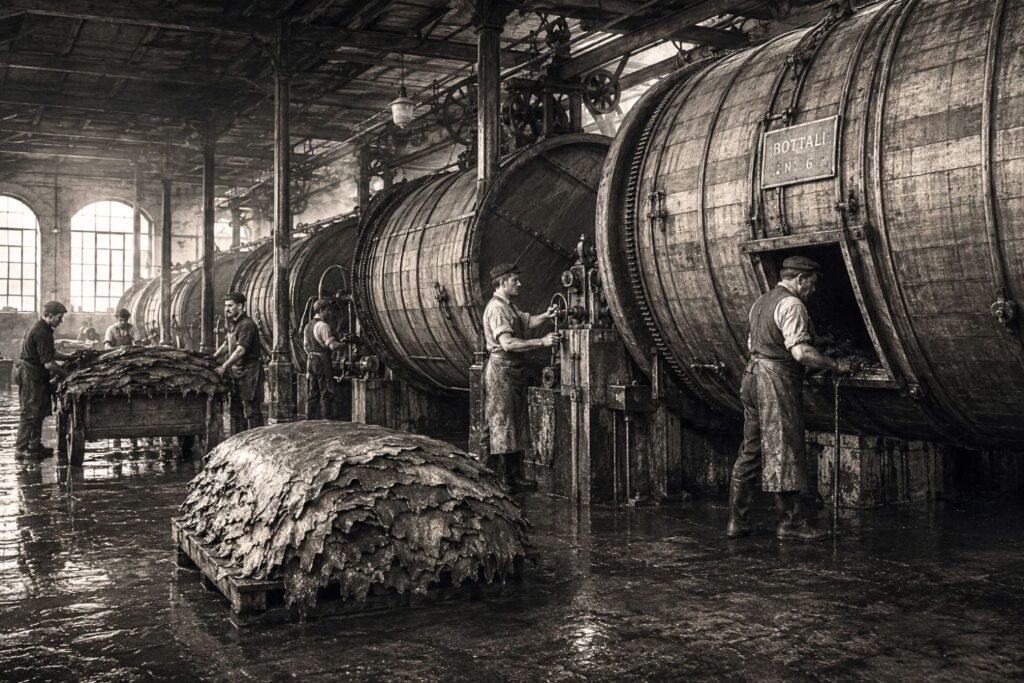
Shortly afterwards, chrome tanning spread, completely revolutionizing the industry. Compared to traditional process, this technology allowed much faster processing times, greater softness of treated leathers, higher productivity, and improved uniformity of processing.
From that moment on, tanning entered the modern industry.
Tanning today: tradition, technology and sustainability
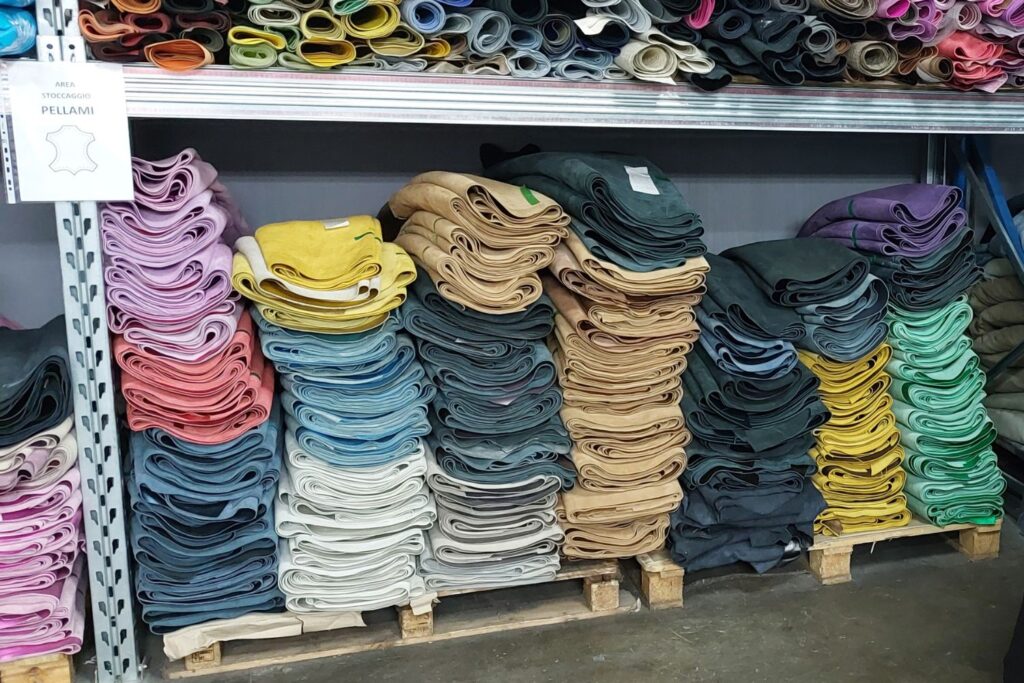
Today, the tanning industry is one of the most advanced expressions of the transformation of natural materials.
Contemporary production incorporates:
- raw material selection;
- chemical control;
- industrial automation;
- advanced finishing;
- traceability.
The main processing families today include:
- Vegetable tanning: more natural in appearance, valued for its aesthetic evolution and character.
- Chrome tanning: the most widespread for flexibility, softness, and productivity.
- Combination tanning: combines characteristics of different processes.
- Innovative tanning: focused on reducing consumption and improving environmental efficiency.
Tanning does not only modify leather: it defines its identity
Two hides coming from the same animal can become completely different materials. One may be transformed into an elegant shoe, another into a structured bag, and another into a technical coating.
It is tanning that determines most of the final characteristics: softness, resistance, colour, stability, touch, and durability. For this reason, in the leather world, quality does not come only from the origin of the hide, but from the way it is transformed.
Discover ABC solutions for leather storage and handling, designed to improve safety, order, and productivity in critical environments such as tanneries.